
Plant Once, Harvest for Life | Episode 601
Podcast: Play in new window | Download
Subscribe: RSS
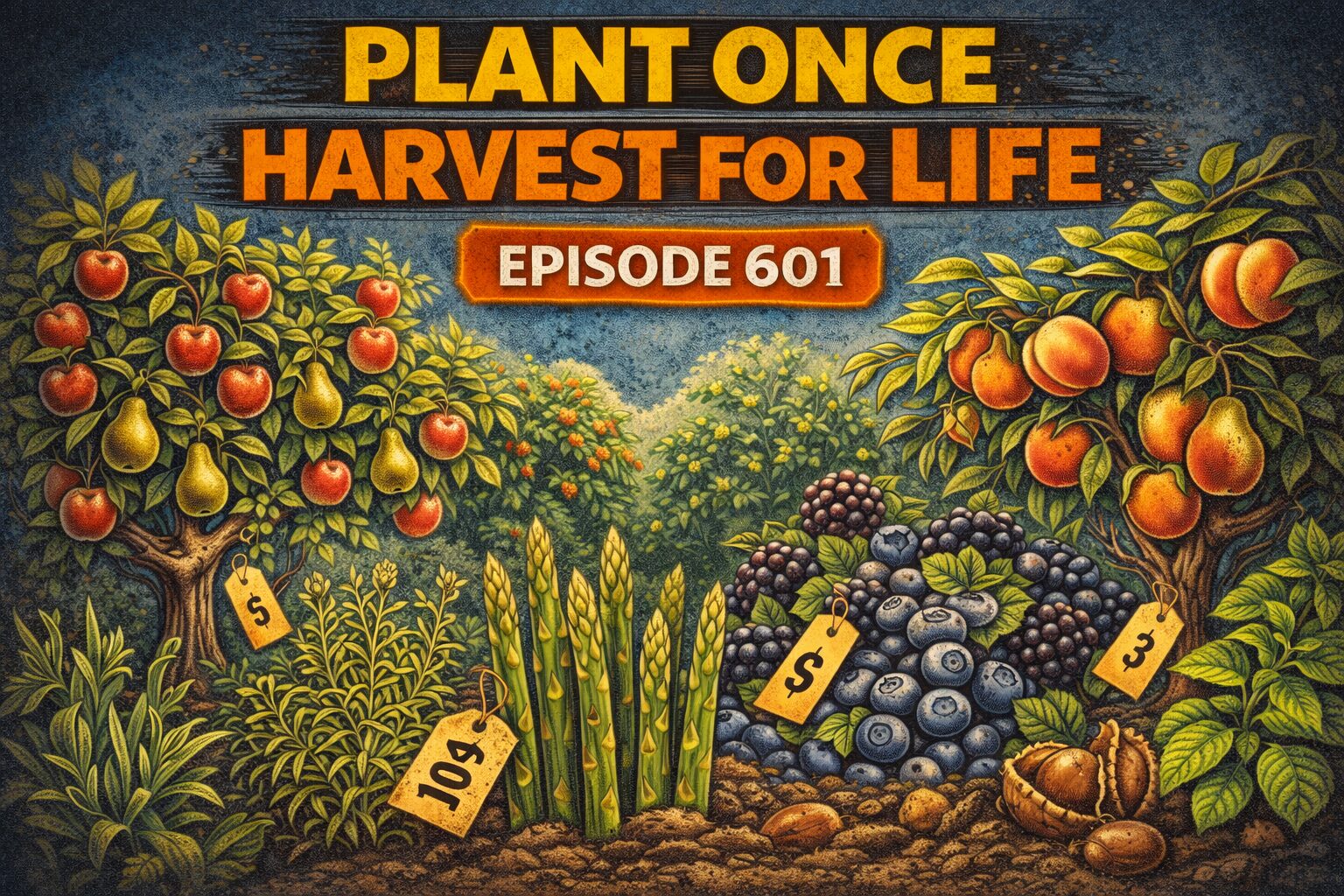
Plant Once, Harvest for Life | Episode 601
Growing food is one of the most important survival skills you can develop. A garden can feed your family, give you independence, and reduce your reliance on fragile supply chains.
But let’s be honest — gardens can also be a lot of work.
Planting every year, maintaining beds, watering, fertilizing, harvesting. It takes time and effort. So what if you could plant something once and harvest from it for years or even decades?
Today we’re talking about perennials you plant once and harvest for life.
Fruit Trees: Long-Term Food Security
Fruit trees are one of the best investments you can make in a long-term food system.
Apples, pears, peaches, plums, nectarines, cherries — once established they can produce food for decades with relatively little maintenance.
The key advice here is simple: grow what you actually like to eat.
If you love apples, plant apples. If you love peaches, plant peaches. But there’s another opportunity here that many people overlook.
Instead of growing the same varieties you see in grocery stores, grow unusual or specialty varieties.
There are thousands of apple varieties alone. Some have unique flavors, unusual colors, or striking appearances. Things like pink-fleshed apples or deep purple varieties can stand out in farmers markets and command a higher price.
If you’re going to plant trees that will produce for decades, you might as well plant something interesting.
Avoid Monocropping
Another reason to grow multiple varieties is resilience.
If you plant twenty identical apple trees and a pest or disease hits that specific variety, you could lose your entire orchard.
By planting different varieties, you reduce the risk and increase the overall resilience of your system.
It also extends your harvest window since different varieties ripen at different times.
Berry Bushes: Easy Perennial Calories
Berry bushes are another excellent perennial food source.
Blueberries, raspberries, and blackberries can produce fruit year after year once established. Many of them spread naturally and become even more productive over time.
They’re also easy to harvest and can fit into small spaces.
Some berry bushes can even serve as natural barriers. Thorny plants like blackberries and raspberries can help deter animals or even people from wandering through certain areas.
That means your food production can also double as a defensive landscape feature.
Asparagus: A Perennial Vegetable
Most vegetables are annuals, meaning you have to plant them every year.
Asparagus is one of the rare exceptions.
Once established, an asparagus patch can produce for 15–20 years or more. It takes a few years to get going, but once it does, it comes back every spring and keeps producing.
It’s one of the best “plant once, harvest for years” foods you can grow.
Rhubarb and Perennial Herbs
Rhubarb is another tough perennial plant that comes back year after year.
It produces large stalks that can be used in pies, jams, and preserves. It’s cold-tolerant and very hardy, making it a good option in many climates.
Herbs are another category that often comes back year after year.
Plants like mint, oregano, thyme, chives, and rosemary can continue growing season after season with minimal effort.
Growing herbs at home saves money and keeps fresh flavor available anytime you need it. Instead of buying a bunch of herbs and letting half of it rot in the refrigerator, you can simply step outside and cut what you need.
Nut Trees: High-Calorie Survival Food
Finally, we have nut trees.
Pecans, walnuts, and chestnuts produce calorie-dense foods that can feed people for generations.
Nuts contain healthy fats and protein — things that can be harder to obtain in survival situations.
Unlike annual crops, these trees can produce for decades or even longer, making them an excellent long-term investment for a food-producing landscape.
Chestnuts are particularly interesting historically. The American chestnut once dominated forests across the eastern United States before blight nearly wiped it out.
Today people are working to restore blight-resistant varieties, while Chinese chestnuts remain widely available and productive.
Building a Perennial Food System
The biggest takeaway from today’s episode is simple.
Annual gardens are great, but perennial food systems are powerful.
Plant trees. Plant berry bushes. Plant herbs that come back every year. Add asparagus, rhubarb, and nut trees.
These plants reduce your workload while increasing long-term food production.
And the sooner you plant them, the sooner they start producing.
Because when it comes to perennial food systems, the best time to plant them was yesterday.
The second best time is today.
This has been James from SurvivalPunk.com.
DIY to Survive.
Amazon Item OF The Day
Think this post was worth 20 cents? Consider joiningThe Survivalpunk Army and get access to exclusivecontent and discounts! |

Don’t forget to join in on the road to 1k! Help James Survivalpunk Beat Couch Potato Mike to 1k subscribers on Youtube

Want To help make sure there is a podcast Each and every week? Join us on Patreon
Subscribe to the Survival Punk Survival Podcast. The most electrifying podcast on survival entertainment.
Like this post? Consider signing up for my email list here > Subscribe
Join Our Exciting Facebook Group and get involved Survival Punk Punk’s









Follow Us!