
The Upgrade Trap | Episode 600
Podcast: Play in new window | Download
Subscribe: RSS
The Upgrade Trap | Episode 600
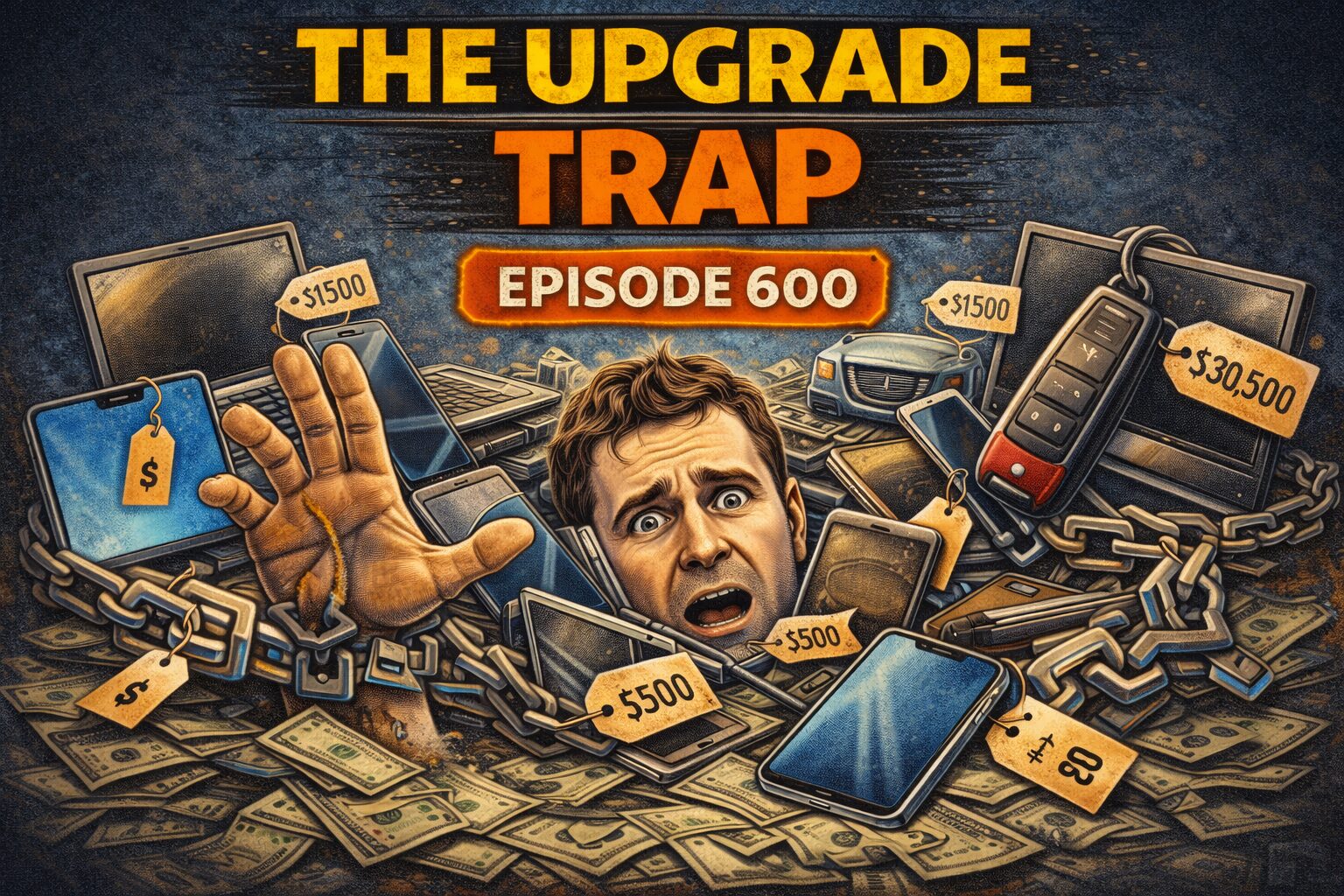
It’s incredibly easy to fall into what I call the upgrade trap.
Phones, laptops, TVs, cars — companies are constantly pushing the newest version of everything. The marketing tells you your current gear is outdated, slow, or missing the latest features. So people upgrade every year or two without really thinking about the long-term cost.
Today we’re talking about how this trap works, why it’s so effective, and how you can break free from it.
The Phone Upgrade Cycle
Smartphones are probably the most obvious example of the upgrade trap.
Every year there’s a new iPhone. Every year there’s a new Android flagship. Folding phones, bigger cameras, faster processors — and most of the time people are paying more for features they barely use.
For years I fell into this trap myself. Back when the first Android phone came out — the T-Mobile G1 with the flip-out keyboard — I jumped on it immediately. After that I kept upgrading every couple of years.
And phone companies make it easy to do.
They’ll happily “upgrade” your phone while quietly adding another $20–$30 per month to your bill for the next couple years. If you’re doing that for every device in your family, you might be adding $100 or more every month just to keep chasing the newest gadgets.
That’s money that never stops leaving your pocket.
A Smarter Way to Handle Phones
These days I take a completely different approach.
First, I stopped paying for phone insurance. That alone saves around $18 or more every month. If you take that same money and just set it aside, you’ll have enough to buy a replacement phone every year if something goes wrong.
When my phone breaks, I simply go to eBay and buy a model that’s a couple years old. Usually I can get one for around $100–$200. Then I sell my old phone — even if it’s damaged — and recover some of the cost.
People buy broken phones all the time to repair and flip them.
So instead of paying monthly fees forever, I just replace devices when I actually need to.
It’s simple and it saves a ton of money.
Planned Obsolescence Everywhere
Phones aren’t the only place this happens.
Software companies do it too.
Microsoft recently caused a lot of backlash by ending support for a bunch of devices that aren’t even that old. Suddenly perfectly functional computers are considered “obsolete.”
Laptop manufacturers have also leaned heavily into planned obsolescence. Cheap laptops in the $300 range often seem designed to last only a couple years before something fails.
Hard drives die. Performance slows down. Parts wear out.
For years I would just buy a new laptop every few years because it seemed easier than fixing the problem.
Eventually I stopped doing that.
Now I’m still using a desktop that isn’t perfect, but it works. Sometimes a simple upgrade — like adding RAM or doing a fresh operating system install — can breathe new life into a machine.
Companies want you replacing devices constantly. But most of the time you don’t actually need to.
The Worst Upgrade Trap: Cars
Phones and laptops are expensive enough, but the worst upgrade trap is cars.
The average car payment today is around $400 per month — and many people are paying far more than that. I’ve seen car payments pushing $900 a month.
That’s basically a second mortgage.
And people get stuck in this cycle where they trade in a car every few years and start the payment clock all over again.
Personally, I’ve almost always bought used cars. It’s not glamorous, but it works.
The better approach would be saving money in a high-yield savings account and paying cash when you need a replacement. Even if you don’t do that perfectly, buying used vehicles can save you an enormous amount of money compared to constantly financing new ones.
Yes, the used car market has been weird lately. But if you’re patient and willing to look around, you can still find good deals.
Don’t Keep Up With the Joneses
At the end of the day, the upgrade trap is really about keeping up with the Joneses.
People want the newest phone. The newest car. The newest everything.
But every upgrade comes with hidden costs: higher bills, more debt, and less financial freedom.
Breaking the cycle means asking a simple question before upgrading anything:
Do I actually need this?
Most of the time the answer is no.
Keep your gear longer. Buy used when possible. Repair things instead of replacing them.
Your wallet — and your long-term resilience — will thank you.
Final Thoughts
The upgrade trap is everywhere in modern life, and companies are counting on you falling into it.
But once you see it, you can start making smarter choices.
Delay upgrades. Buy used. Fix things when you can.
That mindset doesn’t just save money — it builds the kind of independence that survival is really about.
Amazon Item of the Day
A great tool to help avoid the upgrade trap is being able to repair things yourself instead of replacing them.
iFixit Pro Tech Toolkit – Electronics, Smartphone, Computer & Tablet Repair Kit
This toolkit has everything you need to repair electronics like phones, laptops, game consoles, and small gadgets. Instead of tossing something and buying the newest version, you can often replace a battery, screen, or small component and keep the device running for years longer.
Learning basic repair skills is one of those quiet survival skills that saves money and reduces your dependence on constant upgrades.
Think this post was worth 20 cents? Consider joiningThe Survivalpunk Army and get access to exclusivecontent and discounts! |

Don’t forget to join in on the road to 1k! Help James Survivalpunk Beat Couch Potato Mike to 1k subscribers on Youtube

Want To help make sure there is a podcast Each and every week? Join us on Patreon
Subscribe to the Survival Punk Survival Podcast. The most electrifying podcast on survival entertainment.
Like this post? Consider signing up for my email list here > Subscribe
Join Our Exciting Facebook Group and get involved Survival Punk Punk’s









Follow Us!